Search in Las Palmas de Gran Canaria




Essential
-
A stroll through Vegueta
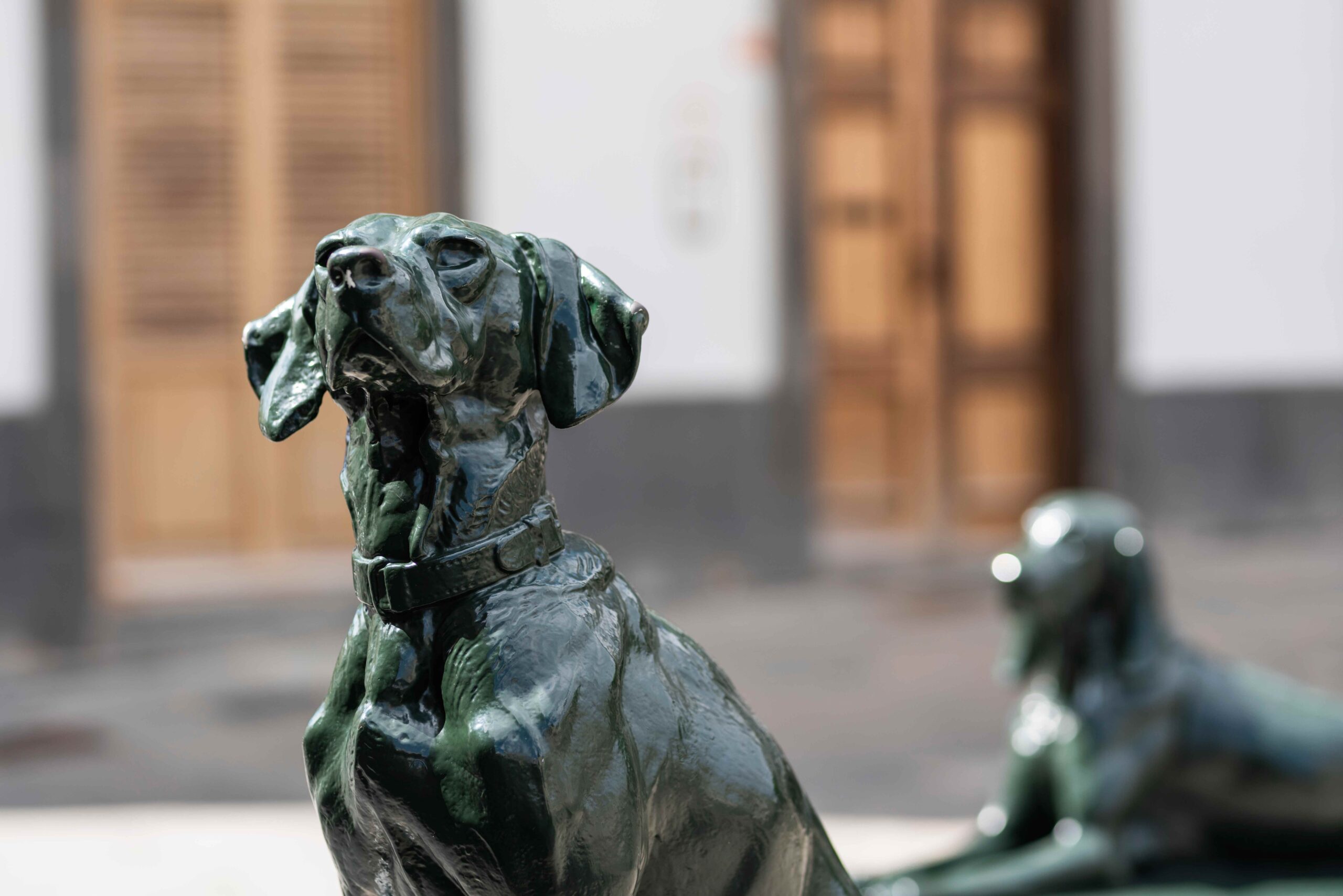
The Dogs of Santa Ana, the sculptural ensemble located at the foot of the staircase leading up to the square, welcome visitors to the city’s founding district. Wandering through its cobbled streets, pausing in its squares and hidden corners, visiting its hermitages and churches—starting with the Cathedral of Santa Ana—and admiring the stately houses with their traditional Canarian balconies is like travelling back in time to the very origins of the city.
-
The Cathedral
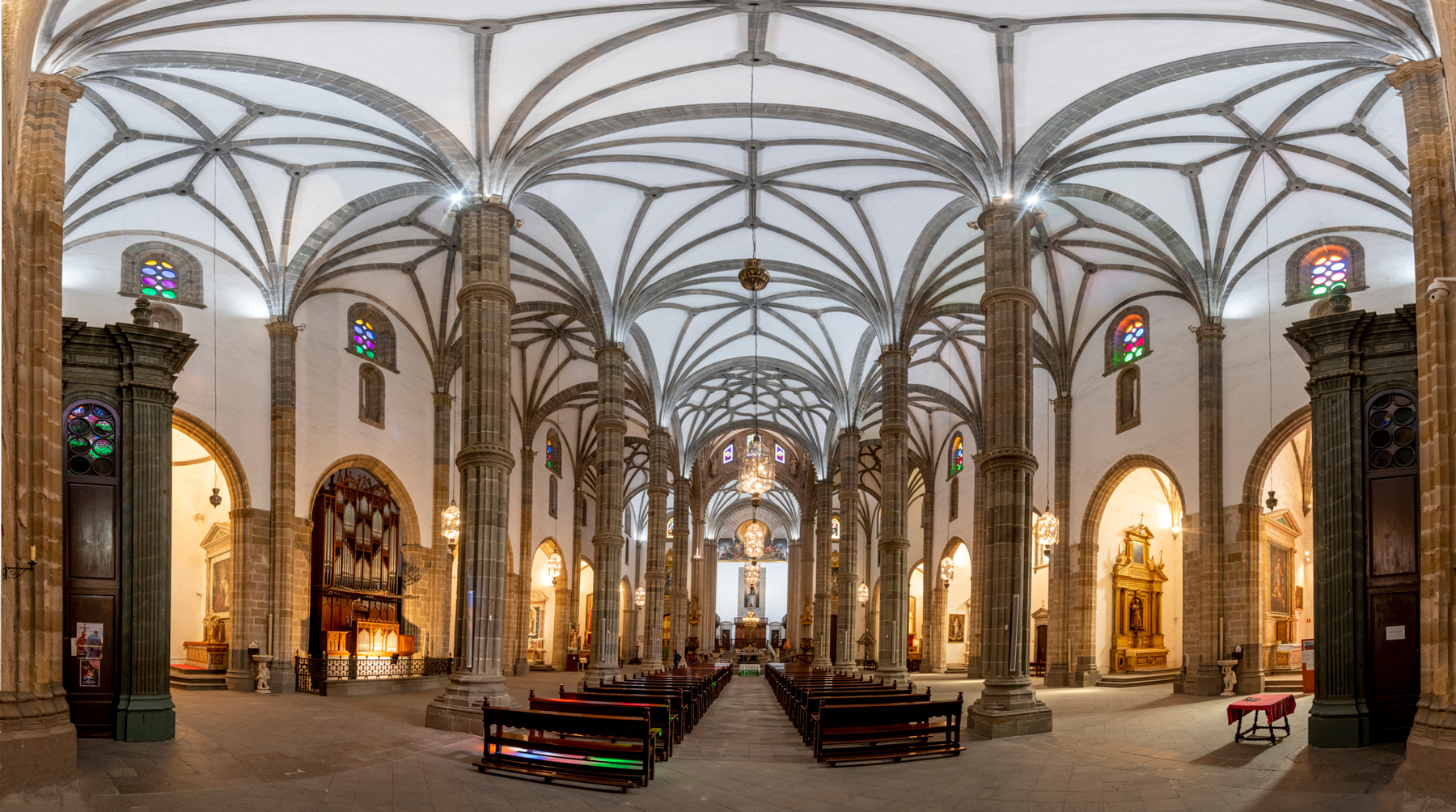
The Cathedral of Santa Ana has presided over Plaza de Santa Ana for five centuries. Built by order of the Catholic Monarchs, the structure—still unfinished—was developed in several stages, which explains the coexistence of different architectural styles within the building.
It houses important works of art, some of which are displayed in the Diocesan Museum of Sacred Art, located on one side of the cathedral around the Patio de los Naranjos. From the top of the cathedral, visitors can enjoy panoramic views of the city and Las Palmas Bay.
-
Columbus House
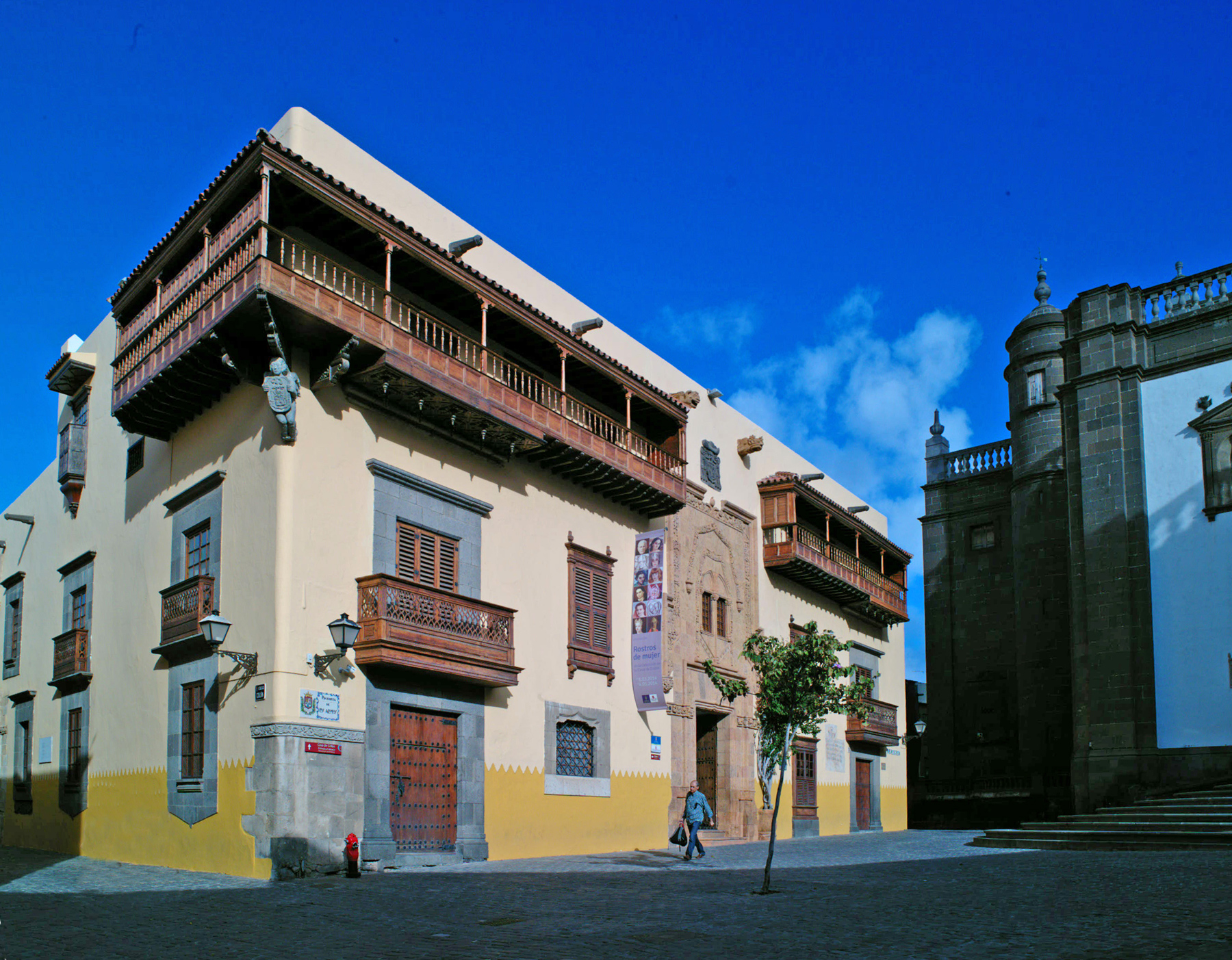
Christopher Columbus is very present in the Vegueta district. At the Hermitage of San Antonio Abad, where a plaque recalls that the admiral prayed there before setting sail for the New World, and at the Casa de Colón.
This museum and centre for American studies invites visitors, within a singular building, to sail alongside the admiral, journey to the Americas, and explore the history of the Canary Islands and their fruitful relationship with the American continent.
-
The Canarian Museum
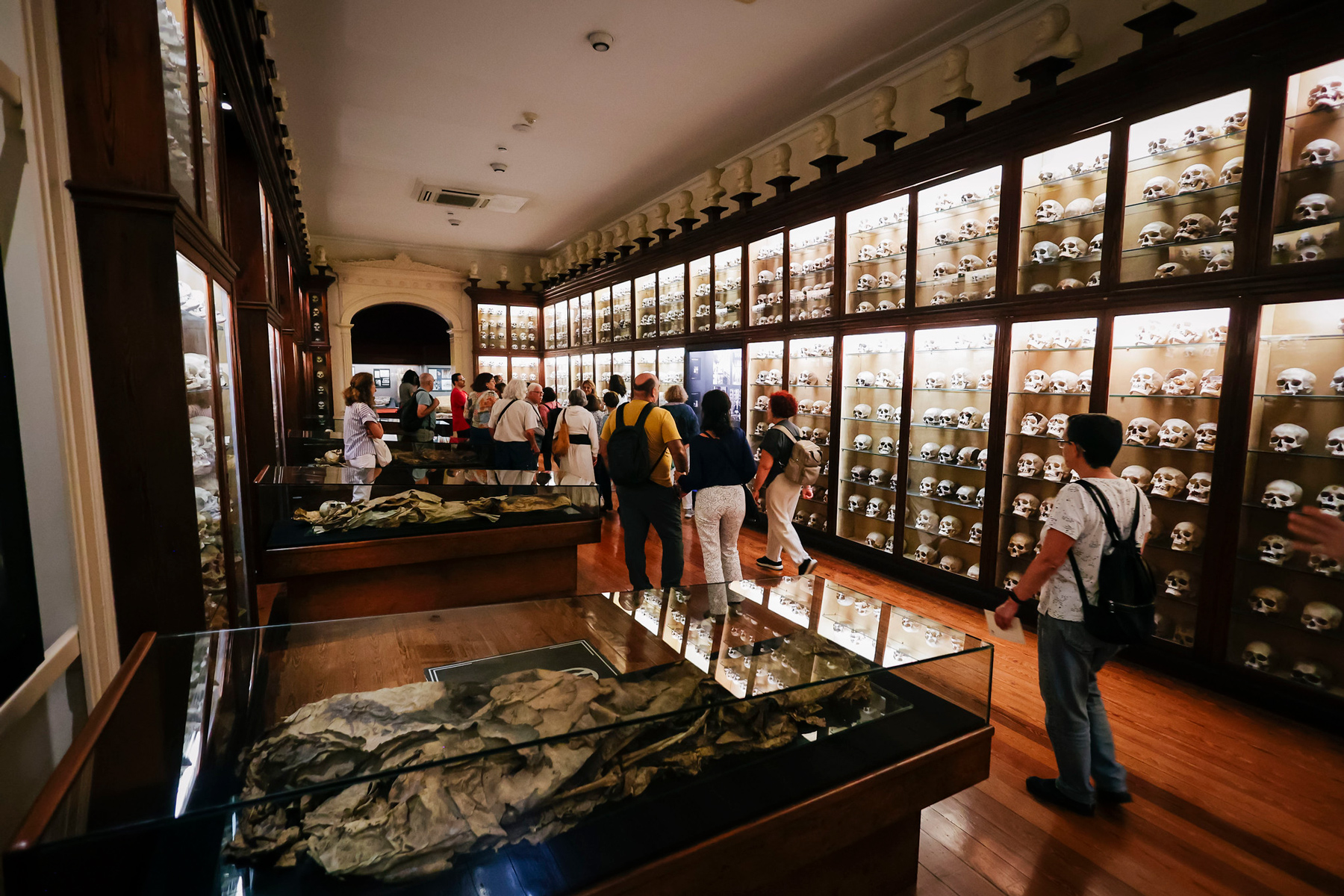
How did the aboriginal population of Gran Canaria live? To answer this question, nothing better than to visit the Canarian Museum. Located in the historic center, it shows the ways of life of this human group of Berber origin that inhabited the island from around the turn of the era until the fifteenth century, when the Castilian conquest and colonization took place. Its best known room is the René Verneau, where you can see in its showcases a large collection of skulls and several mummies.
-
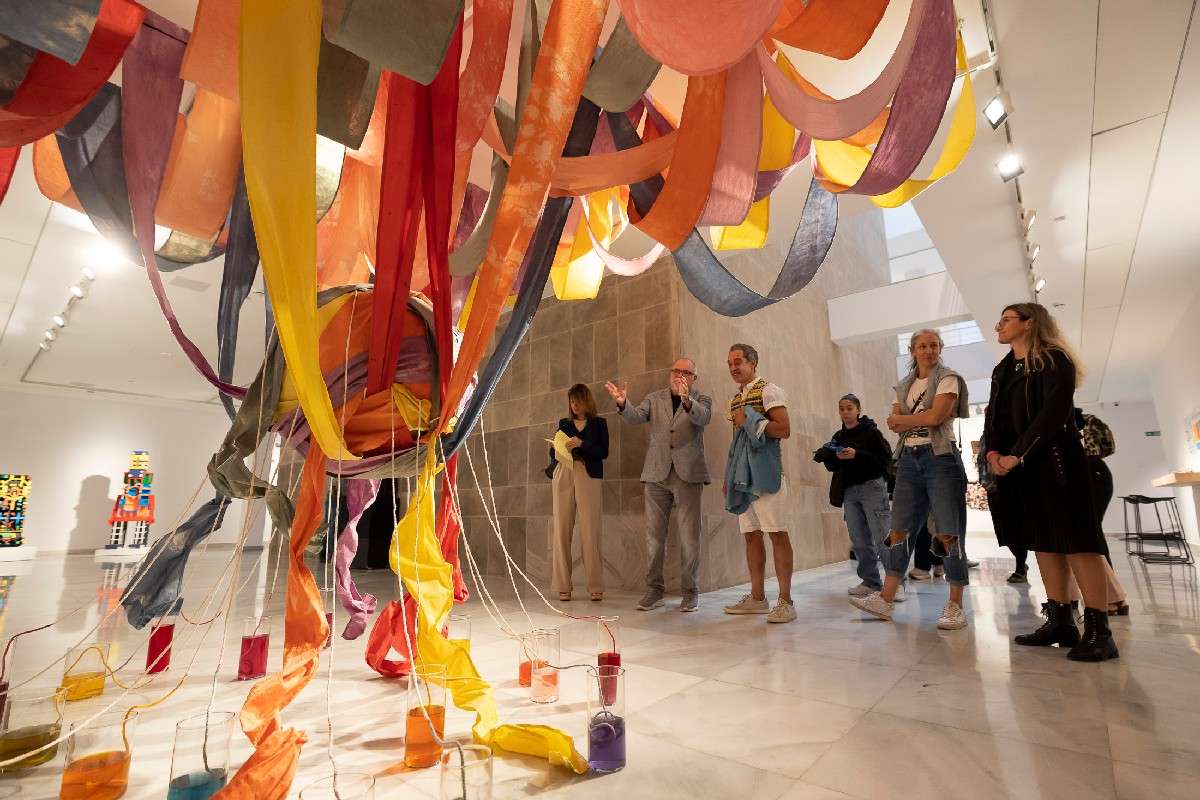
The CAAM
Located in a historic building on Calle de Los Balcones, in Vegueta, the Atlantic Center of Modern Art (CAAM) is dedicated to culture and contemporary art. One of its defining features is the tricontinental vocation of its artistic and intellectual practices, which revolve around Africa, America and Europe.
-
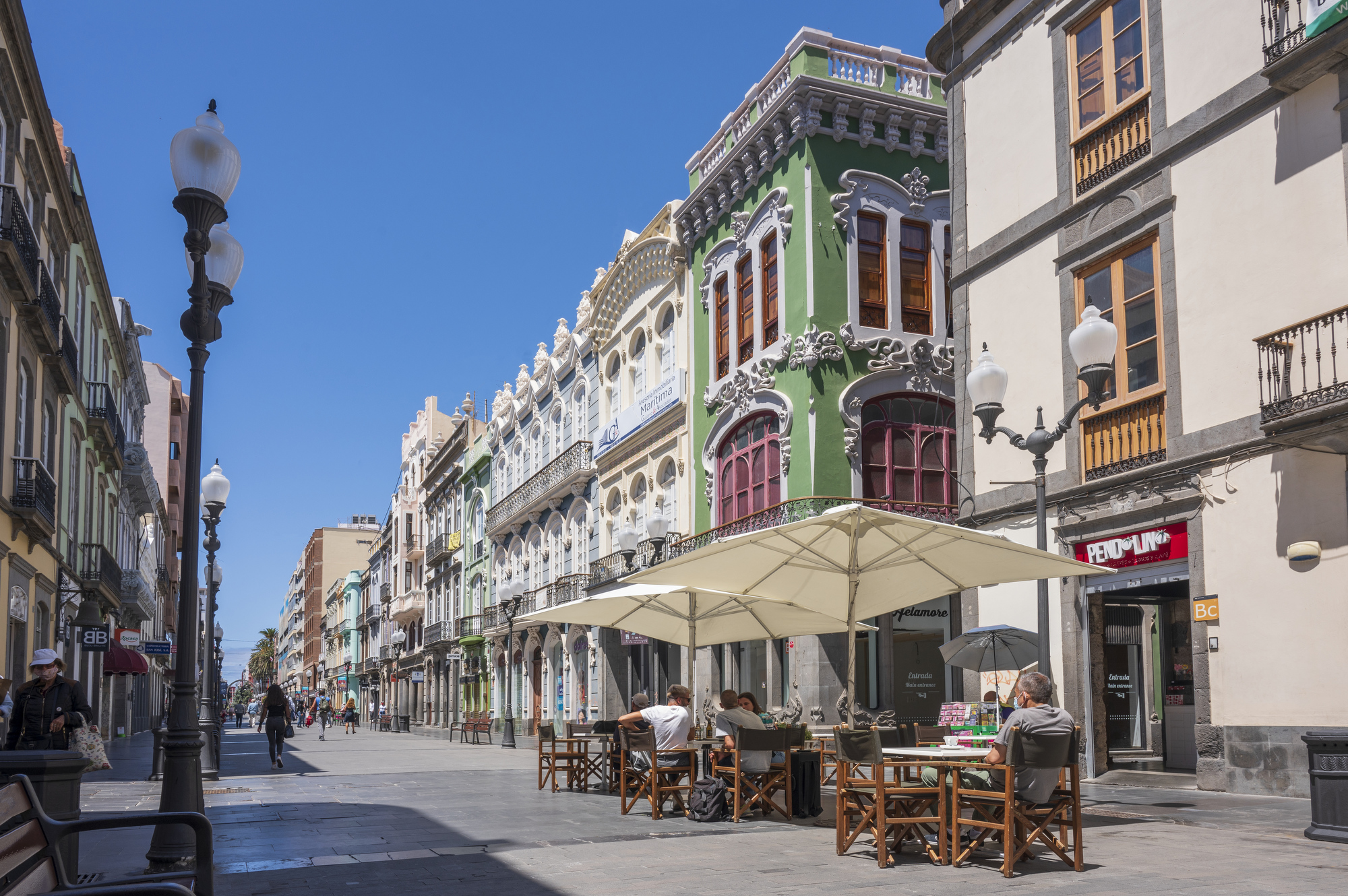
The main street in Triana
Bustling, full of shops and life, and showcasing an interesting collection of Modernist buildings—this is Triana’s main street, a pedestrian thoroughfare that, together with its surrounding streets, forms one of the hearts of the city. Triana is a place to shop, to stroll, to enjoy an ice cream, to dine, to linger over a long after-dinner conversation on its terraces… And also to visit the Teatro Pérez Galdós, located at one end of the street, or the Teatro Cuyás, just a short walk away.
-
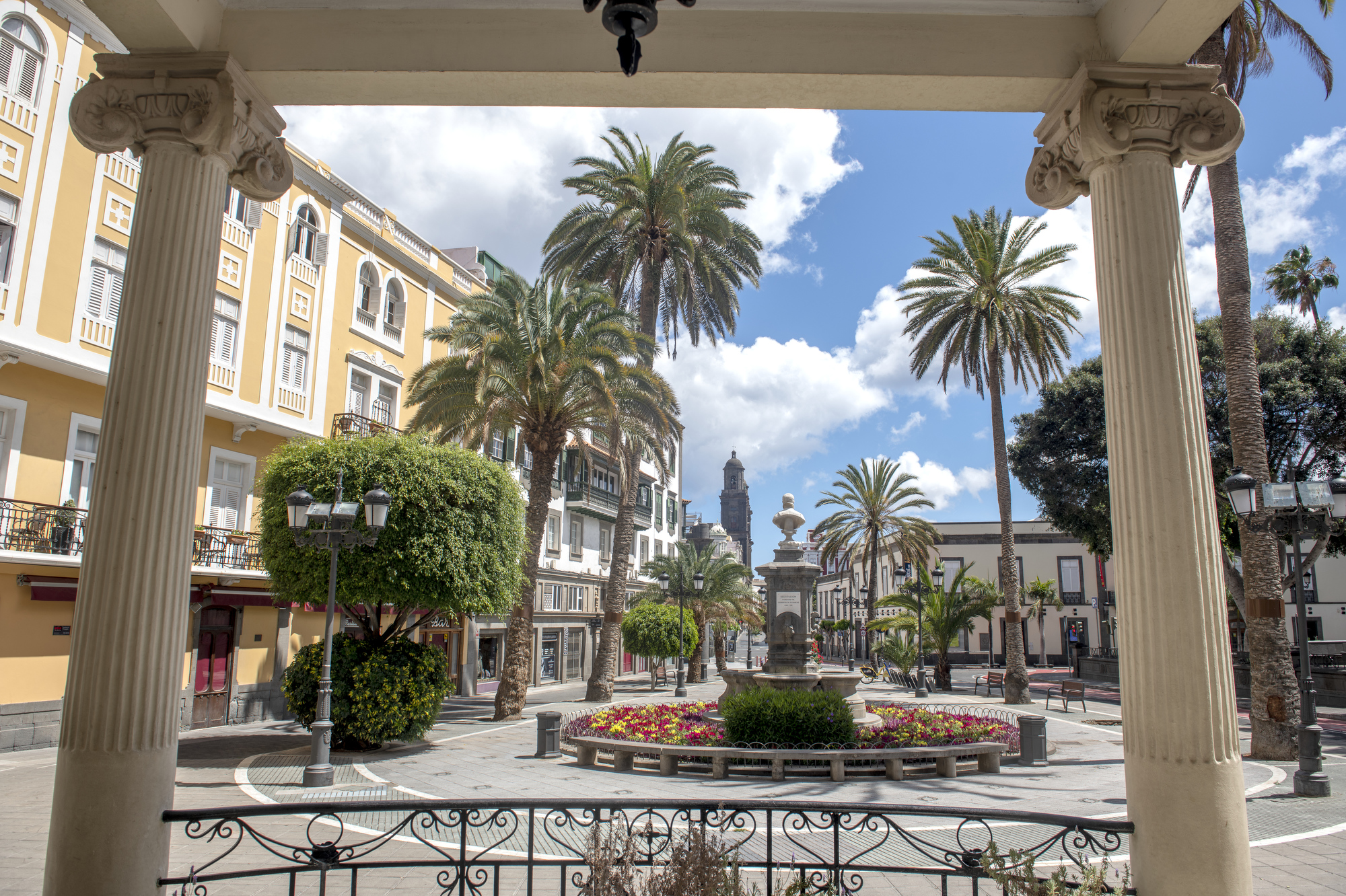
Cairasco Square
The Cairasco Square, at the beginning of the Triana neighborhood, is one of the most beautiful corners of Las Palmas de Gran Canaria. Around it stands the Gabinete Literario, a beautiful historic building in the modernist style, and the Hotel Madrid, an emblematic establishment that has been hosting visitors from all over the world for over a hundred years and has been a meeting point for gatherings on its terrace. This unique space has often been used as a film set for national and international productions.
-
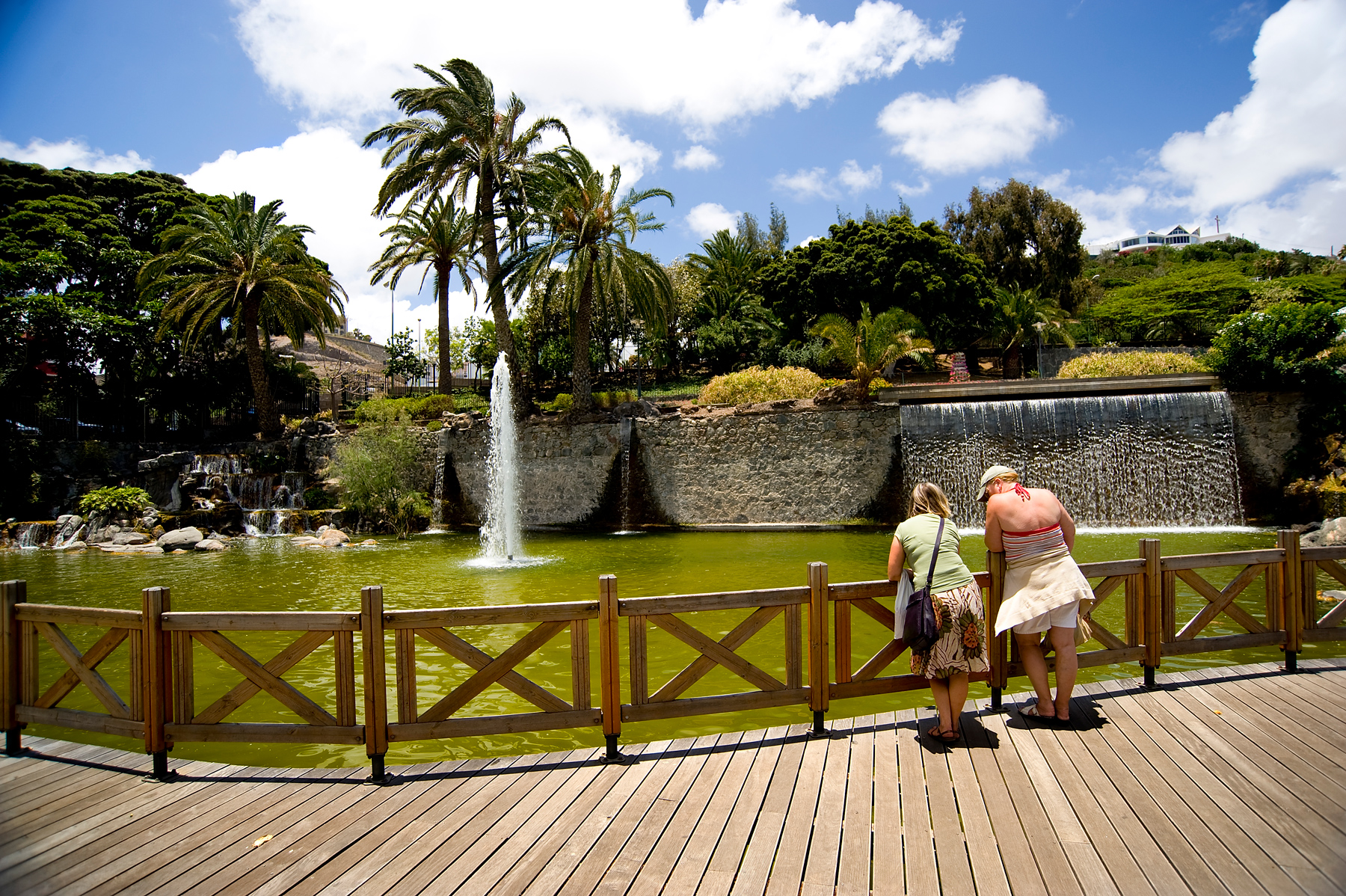
Doramas Park - Pueblo Canario
A lush garden with rich vegetation, centuries-old palm trees, fountains and ponds. The Doramas Parkin Ciudad Jardín, is an oasis of tranquility and beauty amidst the hustle and bustle of the capital of Gran Canaria. It includes the Hotel Santa Catalina and the Pueblo Canario, both designed by the architect Miguel Martín-Fernández de la Torre and his brother, the artist Néstor. The Canarian People is an architectural complex composed of a group of buildings inspired by traditional Canarian architecture. It has a terrace where you can sit down to eat or have a drink and where on Sunday mornings you can enjoy the performance of folkloric groups.
-
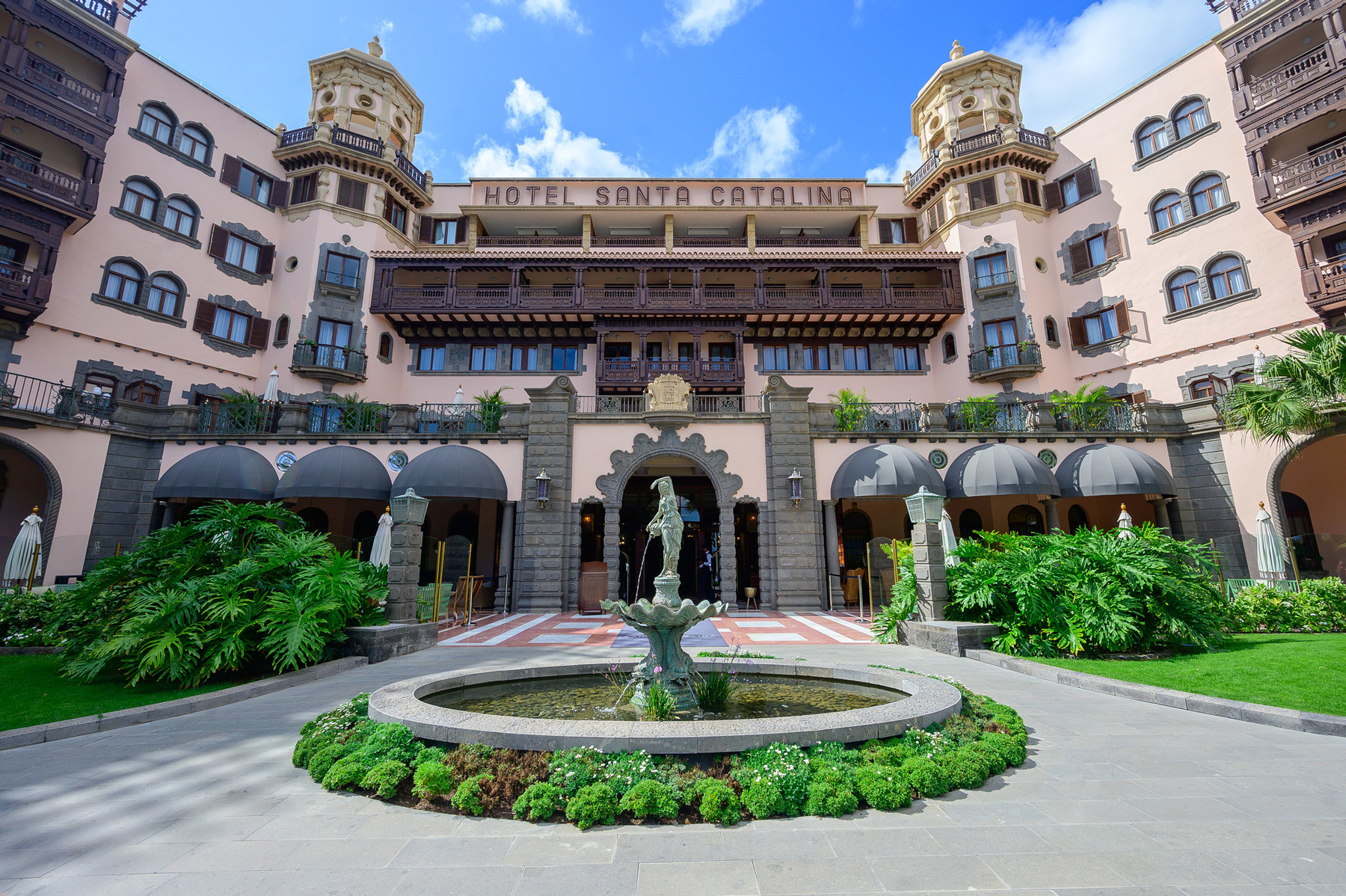
The Santa Catalina Hotel
In 1890 opened the Santa Catalina Hotel built by the British, with “the best in Europe”. Important personalities and travellers from all over the world have stayed here. Set in a unique and singular location, the mid-20th-century reconstruction gave rise to a Neo-Canarian–style building. This municipally owned hotel has since undergone several extensions and refurbishments, allowing it to continue offering luxury services in a setting surrounded by gardens and next to Pueblo Canario.
-

Markets
Fresh and local products, seasonal fruits and vegetables, cheeses and local wines. The four markets of Las Palmas de Gran Canaria -the Vegueta Market, the Central Market, the Port Market and the Altavista Market- have a varied offer. -the Vegueta Market, the Central Market, the Port Market and the Altavista Market- have a varied offer, to which other attractions must be added: emblematic buildings -such as the Port Market, with its modernist architecture in wrought iron, or the Vegueta Market, the oldest in the Canary Islands- and restaurants to stop for a coffee or enjoy the gastronomy of the islands and other parts of the world.
-
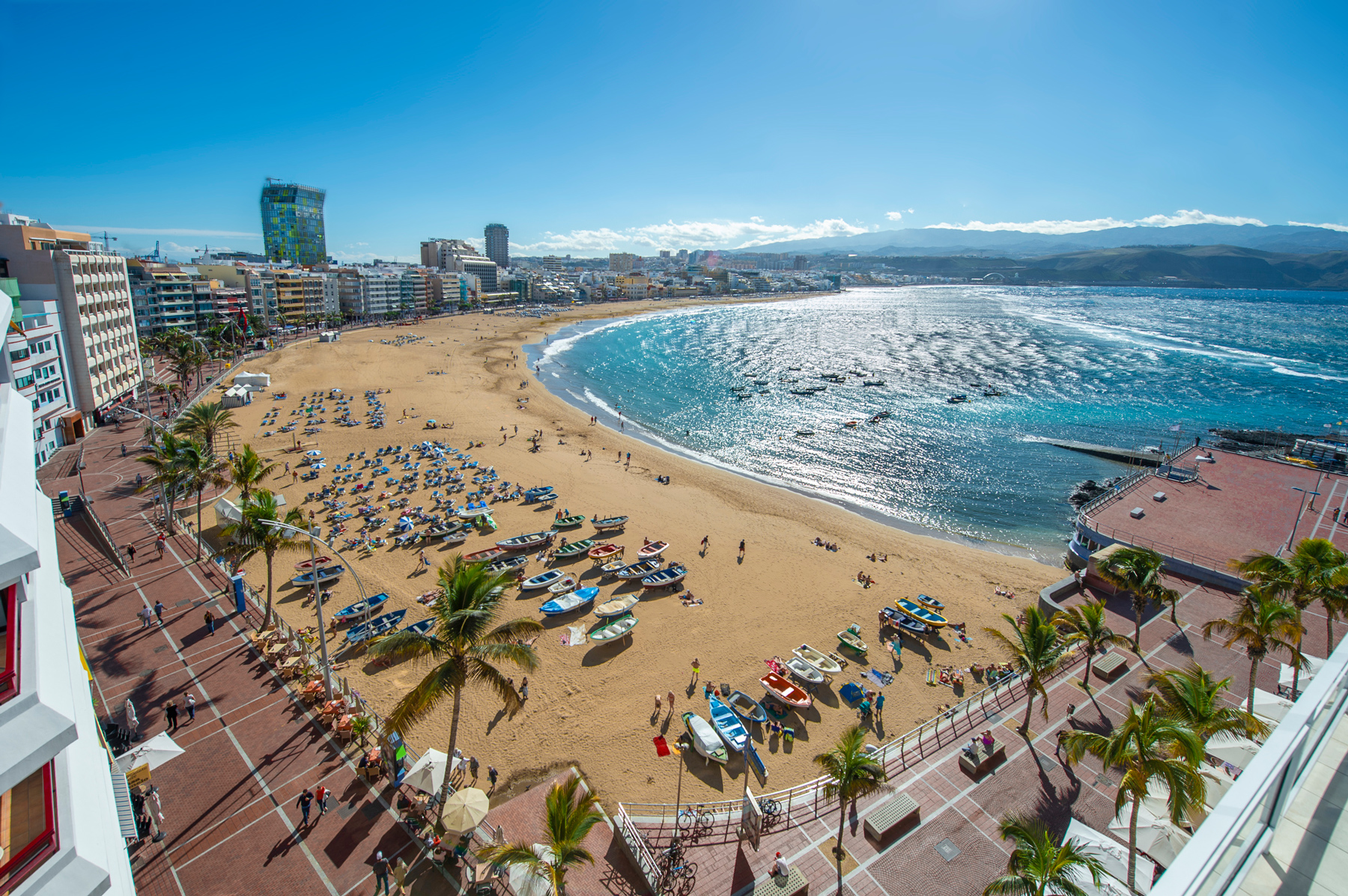
The beach of Las Canteras
Swimming, walking along the shoreline or its three-kilometre promenade, venturing into the sea, discovering some of the 150 species that inhabit this natural aquarium, practising sports in or out of the water, playing on the sand, sitting on a terrace to eat, having a drink, enjoying an ice cream, watching the sunset… The possibilities offered by Las Canteras Beach, one of the finest urban beaches, are endless—by day or by night, every day of the year. And if your visit happens to coincide with one of the city’s festivities, fireworks are guaranteed.
-
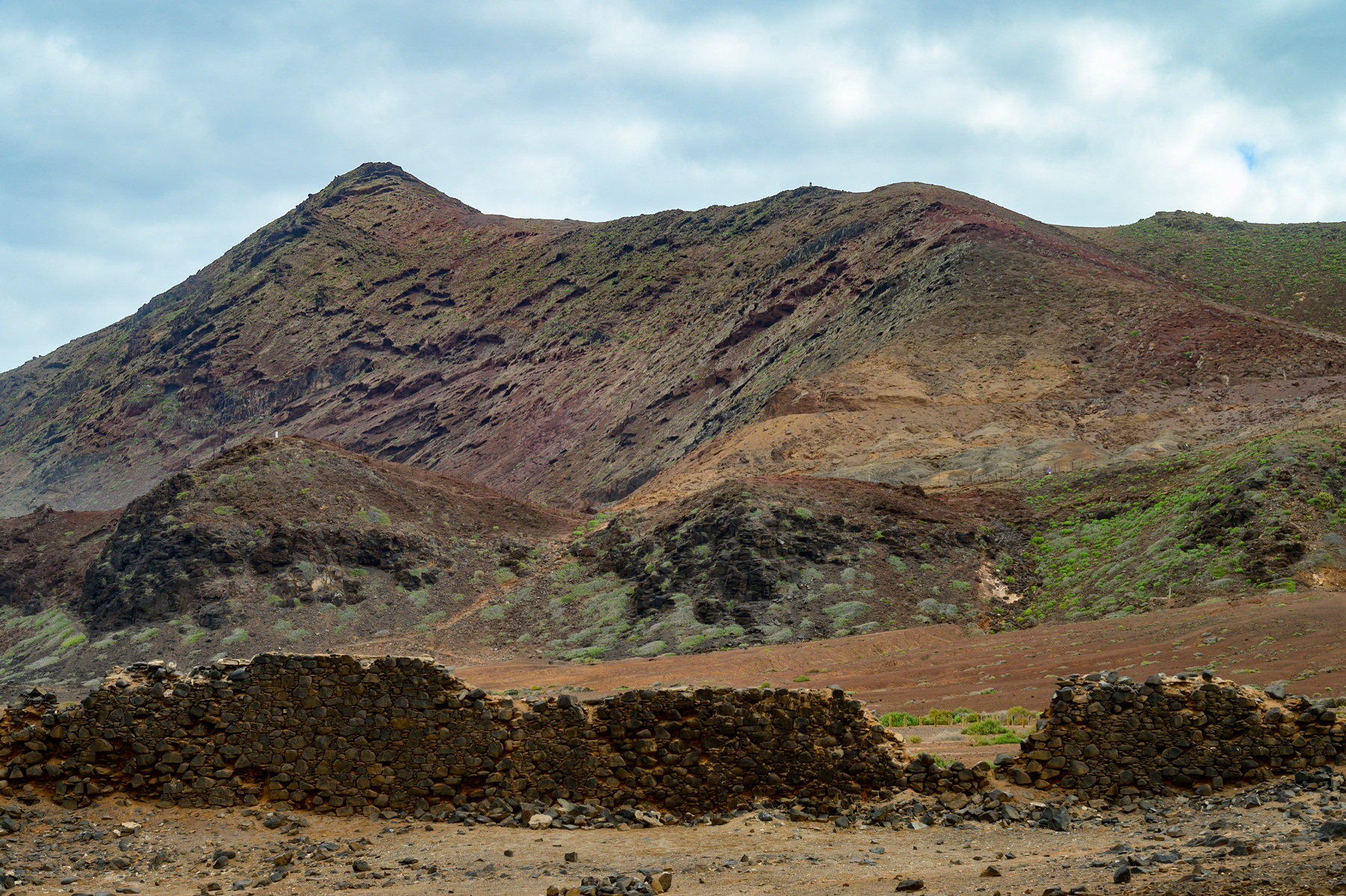
El Confital
Like a well-kept secret, beyond Las Canteras, El Confital hides a natural paradise in the same city. For surf lovers, its right is the best in the world. For those who like to enjoy nature, it has several routes that allow you to discover its geological, ethnographic and historical values. It is located on the peninsula of La Isleta, a Protected Natural Landscape, formed from the last volcanic eruptions that gave rise to the island of Gran Canaria. Both the beach and its bay are considered Special Area of Conservation.
-
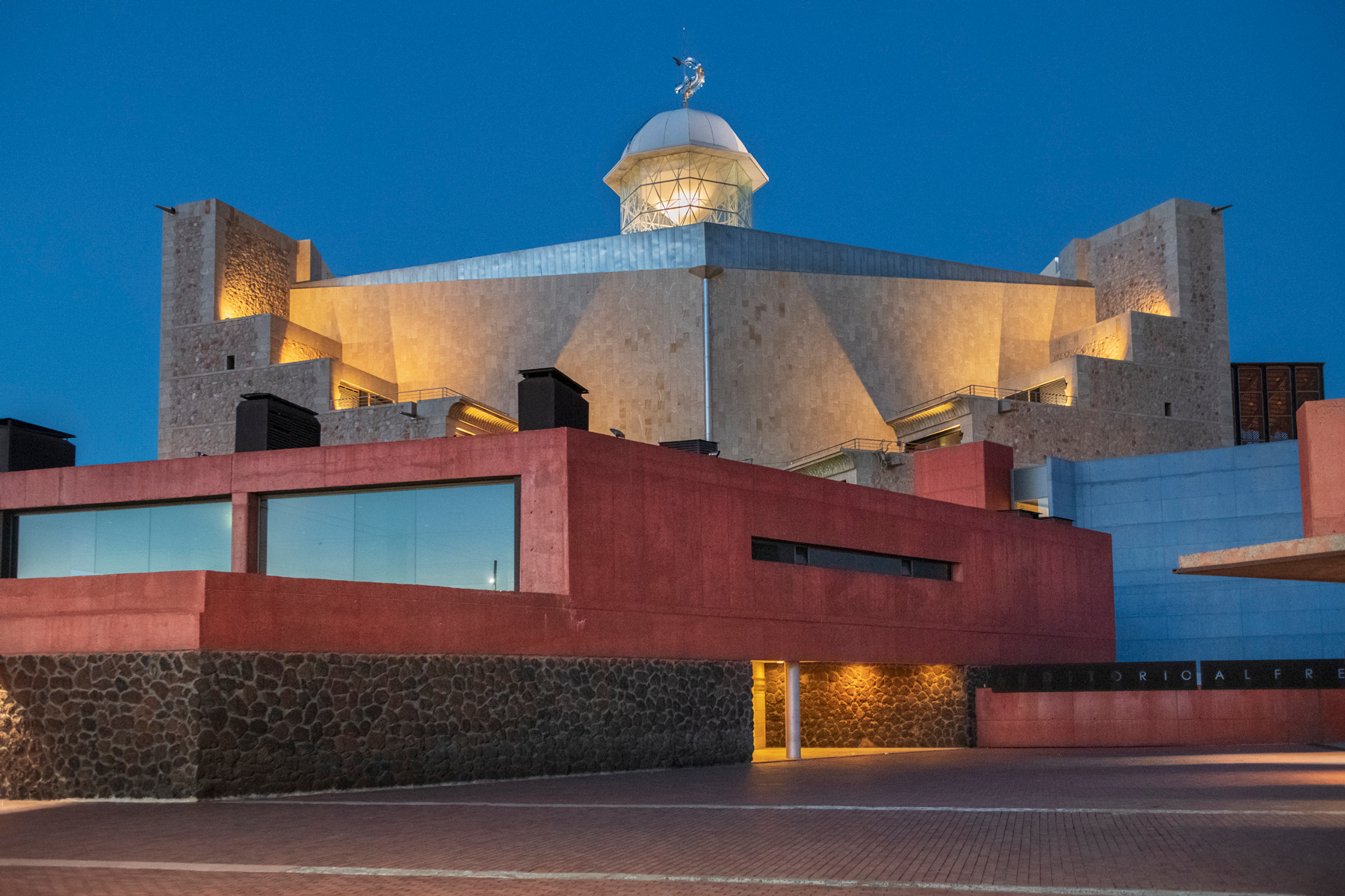
The Alfredo Kraus Auditorium
At one end of Las Canteras Beach stands the Auditorio Alfredo Kraus, a true icon of the city and one of its major cultural venues. Designed as a “fortress that protects and a lighthouse that guides”, the building is the work of the Catalan architect Óscar Tusquets. The sculptural intervention, created by the Gran Canaria artist and architect Juan Bordes, recreates the marine fauna of Las Canteras and is present both inside the building and across its façades.
In the surrounding area, the Guanarteme neighbourhood—a surfer’s paradise—offers a wide range of gastronomic options.
-
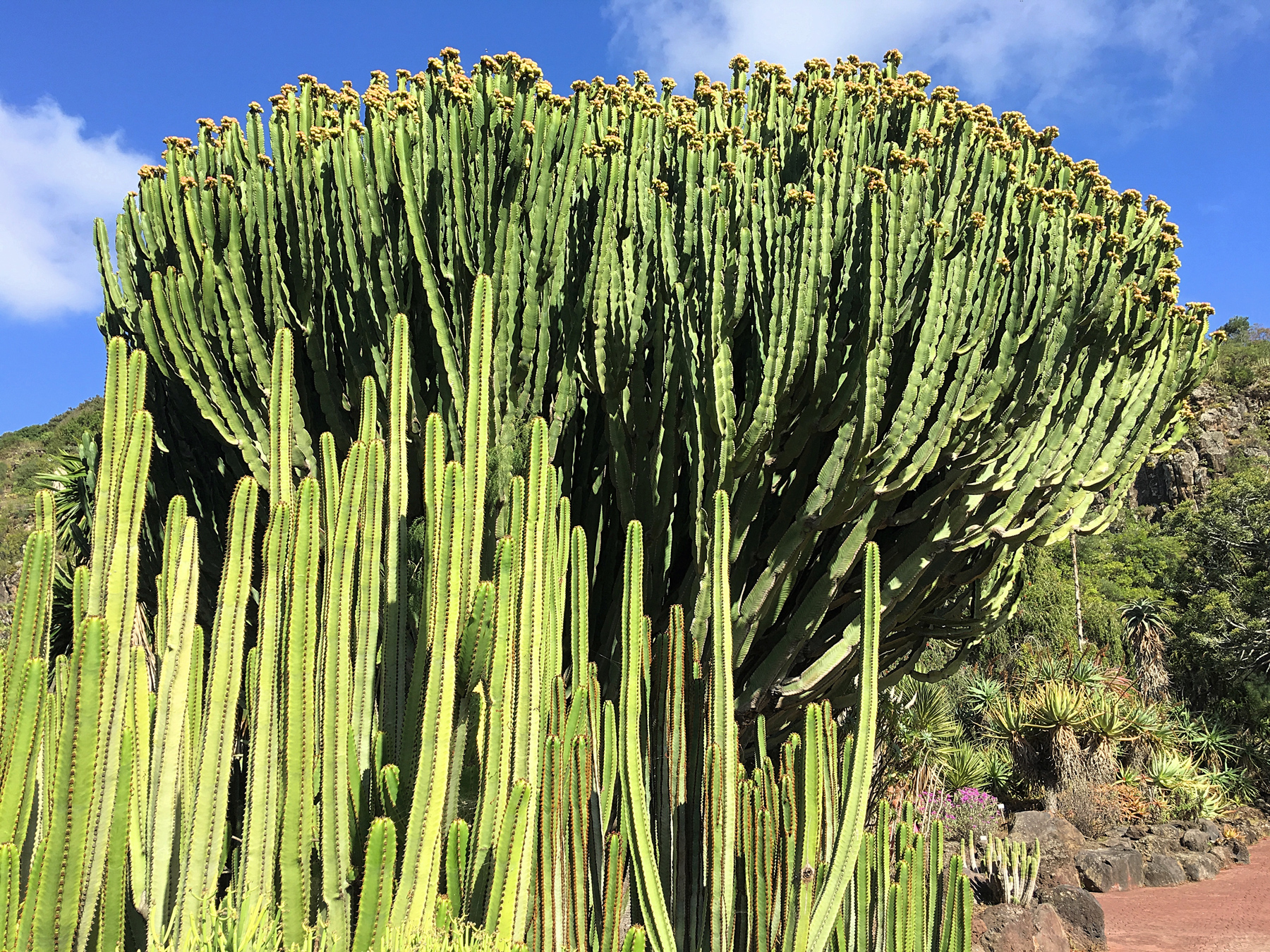
The Viera y Clavijo Botanical Garden of the Canary Islands
Just a few kilometres from the centre of the capital of Gran Canaria, the Jardín Botánico Canario Viera y Clavijo offers visitors a journey through the natural richness of the five continents, with a special focus on the Canary Islands. Across its 27 hectares, the garden showcases the full range of flora from Macaronesia—the Canary Islands, Madeira, the Azores and Cape Verde—one of the regions on the planet with the highest levels of endemic species.
Undoubtedly, it is an opportunity to see, breathe, listen to and feel nature just a short distance from the city.
-
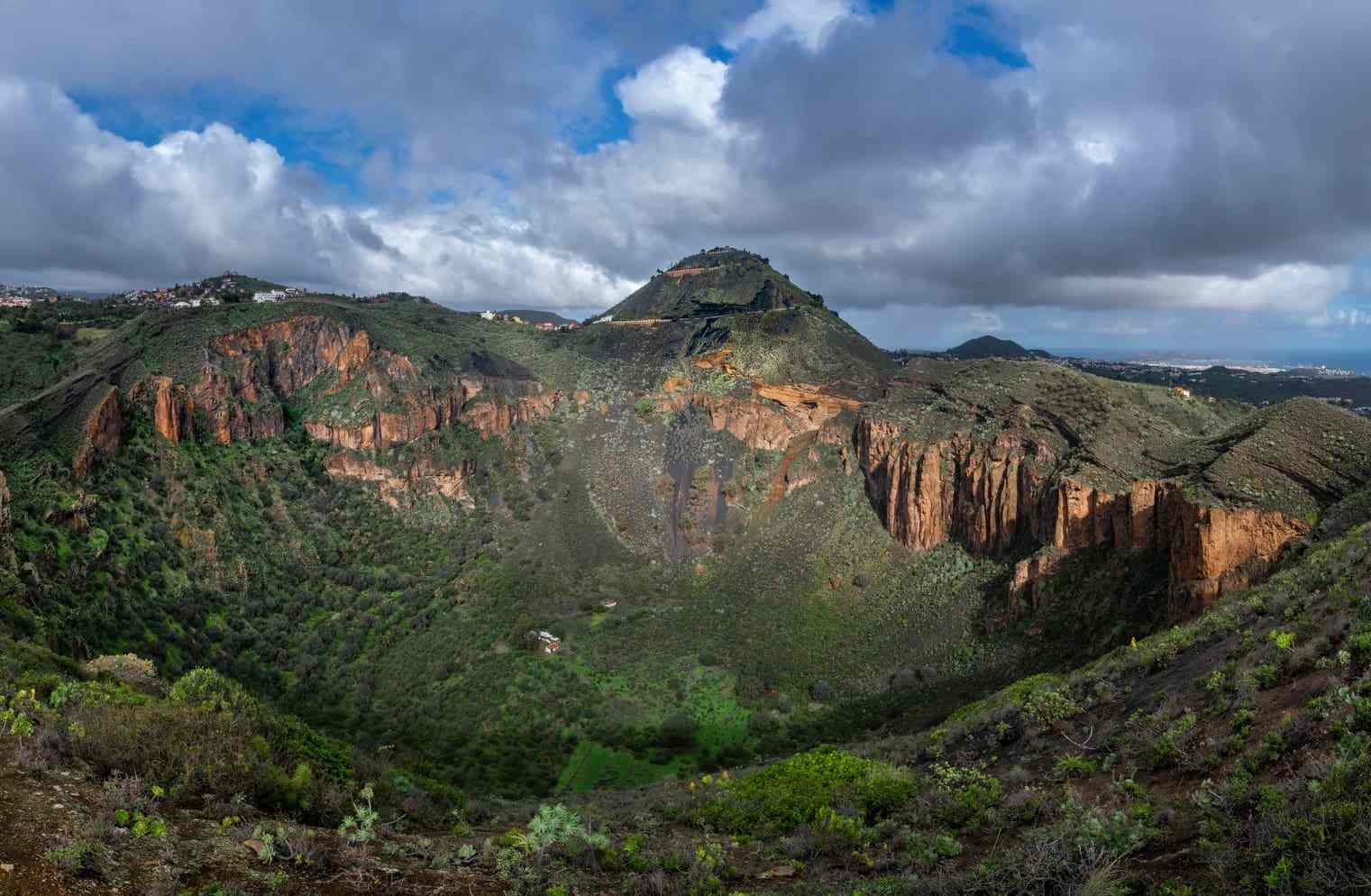
The Bandama caldera
The Bandama Caldera, straddling the municipalities of Las Palmas de Gran Canaria, Santa Brígida and Telde, originated from an eruptive process that began 5,000 years ago. There are two walking trails that allow visitors to explore the caldera on foot.
To complete the excursion to this remarkable natural site, the Pico de Bandama viewpoint—reached via a winding road that passes through the vineyards where Gran Canaria wine is produced—offers spectacular panoramic views of the city, the caldera itself and much of the island’s northeastern region.
-
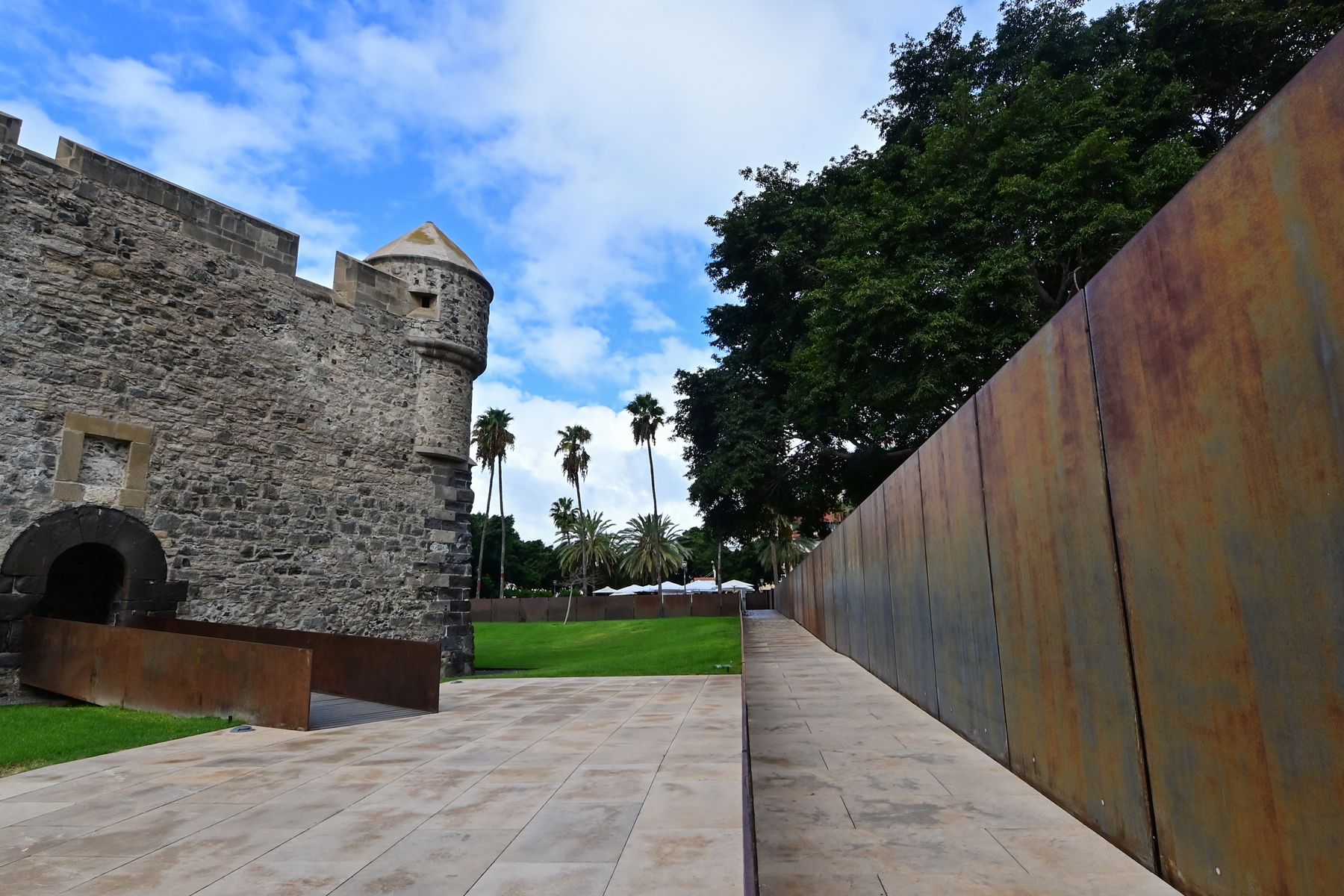
Strengths
To defend against foreign invasions, from the beginning of the conquest of Gran Canaria, fortresses and walls were built in the city. Today, the La Luz Castle (in La Isleta) and the Mata Castle (in the historic center), converted into museums and cultural spaces, are a valuable testimony to the history of Las Palmas de Gran Canaria and its close ties to the sea over the centuries. From the old fortress erected in the sea in San Cristobal the Tower of San Pedro remains as a vestige in this strategic defensive point.
-
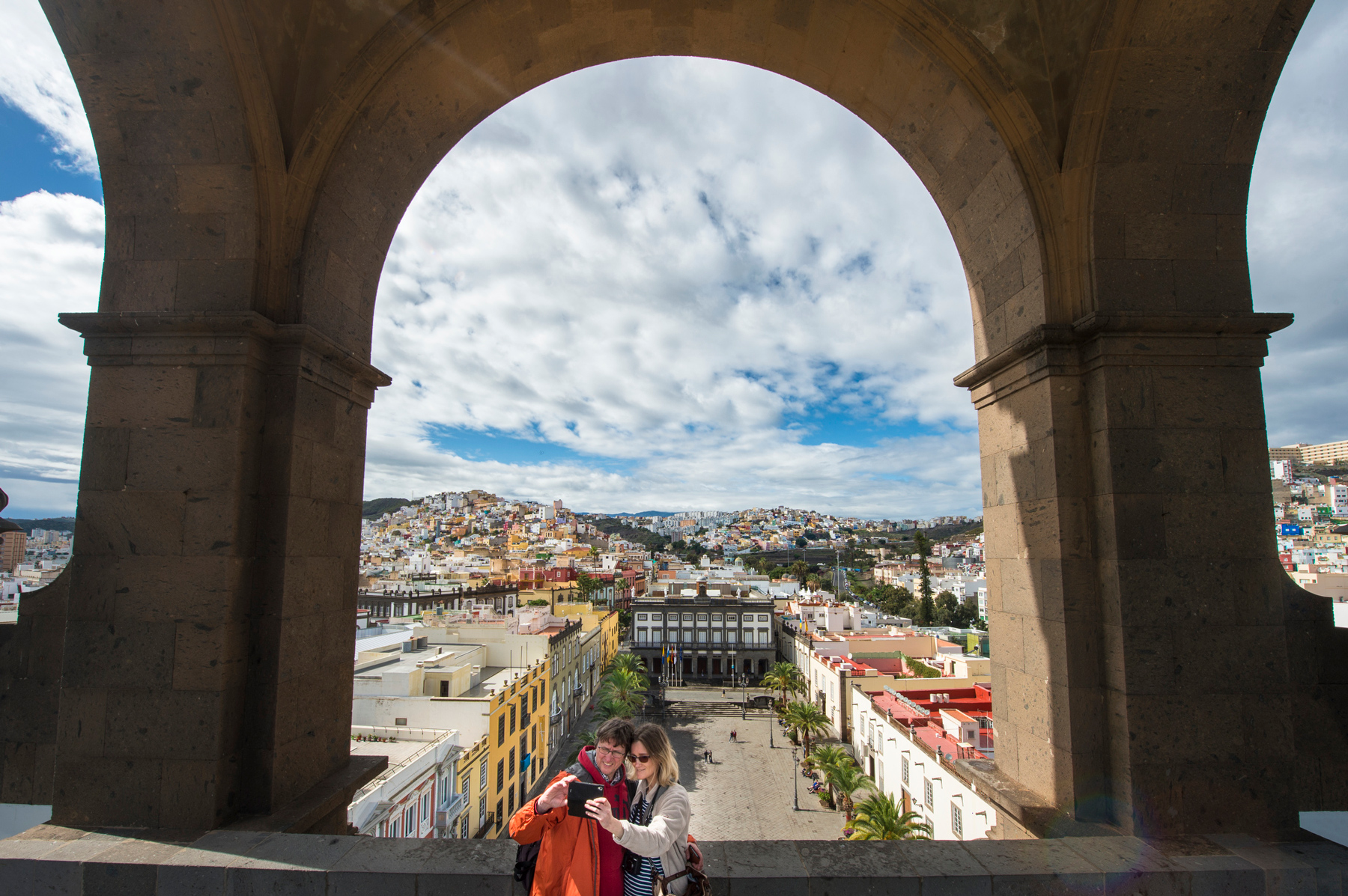
The viewpoints
From the city’s viewpoints, visitors can take in the vastness of the Atlantic Ocean that surrounds much of the city, the impressive scale of its port, the beauty of its two bays, the neighbourhoods that make up Las Palmas de Gran Canaria, and the coastline stretching beyond. Climbing to the north tower of the Cathedral of Santa Ana or to the top of the Casas Consistoriales offers further opportunities to enjoy privileged panoramic views.


