Search in Las Palmas de Gran Canaria




Santa Ana Square
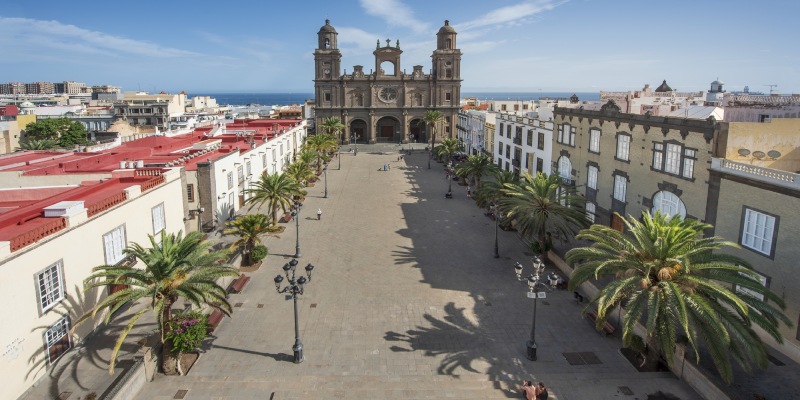
Eight cast-iron dog sculptures flank the small staircase that leads to Plaza de Santa Ana, a public space that has been the heart of Las Palmas de Gran Canaria, both a protagonist and a witness to its history. Today, it continues to be a place for leisure and for the celebration of cultural, religious and festive events.
The construction of the square in the early 16th century, shortly after the founding of the city, marked the urban development of the Vegueta district. It was conceived as an administrative and religious hub, which explains why it is surrounded by important buildings: the Cathedral and the Casas Consistoriales, facing each other; and, on the sides, the Episcopal Palace, the Casa Regental (now the official headquarters of the High Court of Justice of the Canary Islands), and the Provincial Historical Archive, the building where the first great historian of the Canary Islands, José Viera y Clavijo, lived and died.
This concentration of religious and political power in the main square was later taken as a model for cities founded on the other side of the Atlantic.
Attractions
-
Plaza de Santa Ana
View on Google Maps
Vegueta


